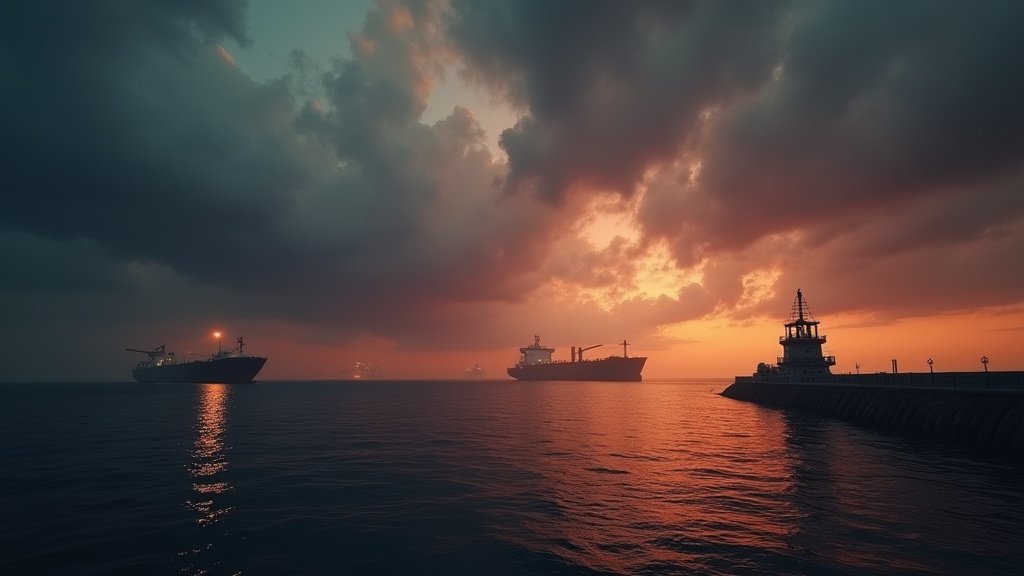
U.S. and Iranian forces engaged in retaliatory strikes over the weekend, dramatically escalating tensions and casting a shadow over diplomatic channels aimed at de-escalating regional conflicts. Conflicting reports have emerged regarding the precise nature and targets of the exchanges, particularly concerning the strategic Strait of Hormuz, a vital chokepoint for global oil transit. Iran’s state media initially claimed strikes hit American military bases across Kuwait, Bahrain, Jordan, Oman, and Qatar, an assertion not corroborated by U.S. officials. In response, U.S. Central Command reported that American forces successfully targeted dozens of Iranian positions, notably employing one-way attack sea drones for the first time in combat operations. This significant military engagement directly threatens ongoing diplomatic initiatives designed to foster peace and stability in the region, with the Strait of Hormuz remaining a central point of contention in broader negotiations between the two nations.
Key Highlights:
- U.S. and Iranian forces conducted retaliatory strikes over the weekend.
- Conflicting reports exist regarding the locations and impact of the strikes.
- The U.S. military reported using one-way attack sea drones for the first time.
- The escalation poses a significant threat to ongoing diplomatic efforts.
- The Strait of Hormuz remains a critical flashpoint in regional negotiations.
Escalation in the Strait: A Volatile Weekend of Military Exchanges
The weekend’s events mark a severe deterioration in the already fraught relationship between the United States and Iran, bringing the two powers to the brink of direct confrontation. The disputed strikes, originating from both sides, underscore the volatile nature of the current geopolitical climate, with the Strait of Hormuz serving as a persistent focal point for regional anxieties and strategic maneuvering.
Conflicting Narratives Emerge from the Strikes
Iranian state media broadcasted claims of significant damage to American military installations within several Gulf states, including Kuwait, Bahrain, Jordan, Oman, and Qatar. These reports, however, were met with strong retractions from U.S. officials. U.S. Central Command (CENTCOM) issued a statement detailing a series of successful strikes against Iranian targets, emphasizing the strategic deployment of novel weaponry. The CENTCOM report highlighted the unprecedented use of one-way attack sea drones by American forces, a move signaling a potential shift in naval warfare tactics and capabilities in the Persian Gulf region.
Strait of Hormuz: A Persistent Nexus of Conflict
The Strait of Hormuz, a narrow waterway connecting the Persian Gulf to the Gulf of Oman, has long been a critical chokepoint for international maritime trade, particularly for oil tankers. Its strategic significance makes it a perpetual flashpoint for tensions between Iran and the U.S. and its allies. The current escalation directly impacts the ongoing diplomatic dialogues aimed at achieving a broader de-escalation of conflicts and fostering regional stability. The threat to free navigation in this vital corridor has far-reaching economic implications, potentially disrupting global energy supplies and markets.
Diplomatic Ramifications and Future Outlook
The exchange of strikes over the weekend has cast a pall over any nascent diplomatic progress. International observers are concerned that this military escalation could derail fragile negotiations and push the region further into a cycle of conflict. The U.S. has consistently maintained its commitment to ensuring freedom of navigation in international waters, while Iran has asserted its right to respond to perceived threats to its sovereignty and interests. The coming days and weeks will be crucial in determining whether diplomatic channels can be reopened and effective de-escalation measures can be implemented to prevent further military engagement.
The Role of Unmanned Systems in Modern Warfare
The reported deployment of one-way attack sea drones by U.S. forces represents a significant development in modern military strategy. These unmanned systems offer distinct advantages, including reduced risk to personnel and the ability to conduct persistent surveillance and strike missions. Their use in this volatile context highlights the increasing reliance on autonomous and semi-autonomous weapon systems in contemporary conflicts, raising questions about accountability, escalation control, and the future of warfare.
Geopolitical Ripples Beyond the Strait
The intensified standoff between the U.S. and Iran has broader geopolitical implications, potentially influencing alliances, regional security architectures, and international energy markets. The situation demands careful monitoring by global powers and international organizations, as any miscalculation could have severe consequences for global peace and economic stability.
FAQ: People Also Ask
Frequently Asked Questions
What is the Strait of Hormuz and why is it important?
The Strait of Hormuz is a strategically vital strait connecting the Persian Gulf to the Gulf of Oman. It is a critical chokepoint for global oil transportation, with a significant percentage of the world’s crude oil passing through it daily. Its strategic importance makes it a frequent site of geopolitical tension.
What are one-way attack sea drones?
One-way attack sea drones, also known as loitering munitions or kamikaze drones, are unmanned watercraft designed to be deployed for a single mission, often culminating in a destructive impact on a target. They can be armed with explosives and are used for reconnaissance or offensive strikes, offering a cost-effective and risk-reducing option for military operations.
What is U.S. Central Command (CENTCOM)?
U.S. Central Command (CENTCOM) is one of the United States’s unified combatant commands, responsible for military operations in the Middle East, North Africa, and Central Asia. It oversees U.S. military activities and security cooperation in a vast and complex region.
What is the significance of conflicting reports in geopolitical events?
Conflicting reports from different state-controlled or independent media outlets often arise during sensitive geopolitical events. These discrepancies can be due to propaganda, lack of on-the-ground access, differing national interests, or deliberate disinformation campaigns, making independent verification crucial for accurate reporting.
How do escalations in the Strait of Hormuz affect global oil prices?
Any military escalation or threat to navigation in the Strait of Hormuz can lead to significant volatility in global oil prices. Traders and investors often react to perceived supply disruptions by driving up prices due to concerns about potential shortages and increased shipping costs. The psychological impact of such events on the market is also substantial.